

UK: Weak growth trend unlikely to be reversed

The United Kingdom remains one of the world’s largest economies. At current exchange rates, UK GDP ranks fifth globally, just behind India and slightly ahead of France. GDP per head is also relatively high by international standards, ranking fourth within the G20 after the United States, Australia and Germany. Despite this strong position, the UK faces a number of medium and long-term economic challenges that are likely to weigh on growth and public finances.
Demographics and growth
First, demographic trends. The population is expected to continue growing over the next 25 years, which provides some support for overall economic expansion, but the ageing of the population and a decline in labour force participation are important structural problems. A rising proportion of older people places pressure on healthcare, pensions and public spending, while lower participation rates reduce the economy’s long-term growth potential.
Inflation pressures remain persistent.
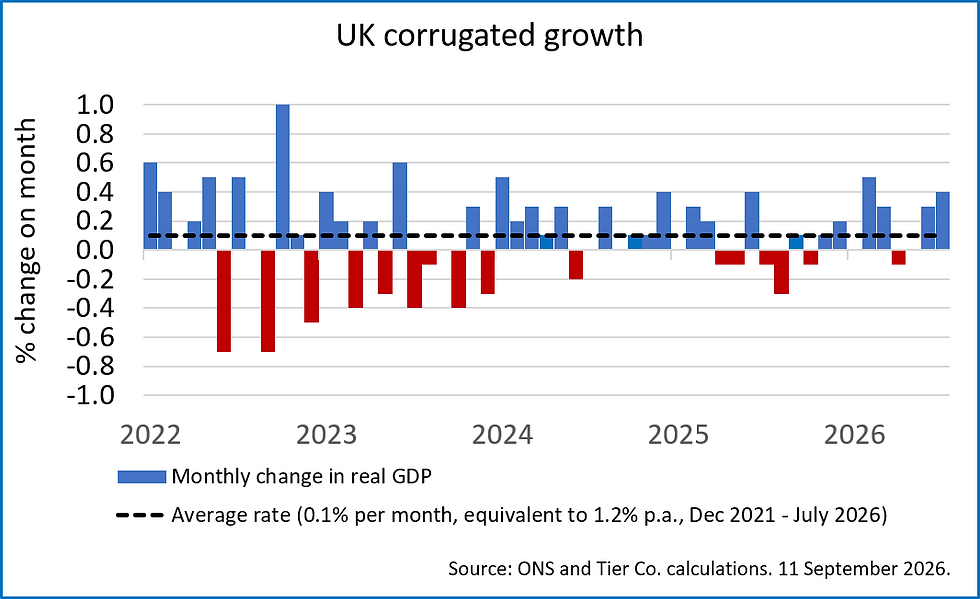
Second, GDP growth remains subdued. In the first half of the year, GDP was 1.0% higher than in the previous year. That is in line with the IMF's forecast for the full year, the post-pandemic trend and our estimate of potential long-term growth. However, growth could well slow in the second half of the year: that has tended to be the pattern in the last two years; uncertainty about the direction of the 28th October Budget under the new chancellor could dampen consumer and business spending; and there are some signs of a softer labour market.
The broader picture remains one of subdued, corrugated growth with variation from month-to-month and underlying growth remaining just over 1% year-on-year.
Climate change and emissions
A brighter note is that on climate policy, the UK stands out as one of the best G20 economies. It has achieved substantial reductions in carbon emissions over recent decades and is one of only two G20 economies, alongside Germany, currently on track to achieve net zero emissions by 2050.

Fiscal Policy
The fiscal outlook is more uncertain. Under the IMF’s forecasts, public debt remains high at around 104% of GDP between 2026 and 2028 before declining slightly in 2029, allowing the government to meet its fiscal rule that debt should be falling by the end of the forecast horizon. The budget deficit is projected to fall below 3% of GDP and the primary balance is expected to move into surplus from 2028 onwards. However, these projections could easily be undermined by additional fiscal spending reflecting multiple structural challenges (higher defence spending, an ageing population and an inability, so far, to curb the growth in social spending) and shorter-term cyclical pressures.
External position
The UK’s external position appears broadly sustainable. The current account deficit is forecast to remain at or below 3% of GDP or below from 2028 onwards, while net foreign assets are only slightly negative. Monetary policy is also close to neutral. Following six consecutive quarter-point interest rate cuts, Bank Rate now stands at 3.75%, which appears broadly appropriate given current conditions.
Governance
Despite some deterioration in governance indicators, including a decline in the UK’s corruption perception ranking over the past decade, the country continues to perform strongly in innovation.
Currency
Sterling appears somewhat overvalued on one purchasing power parity measure (The Economist's GDP-adjusted measure), although broader valuation metrics suggest the currency is close to fair value.